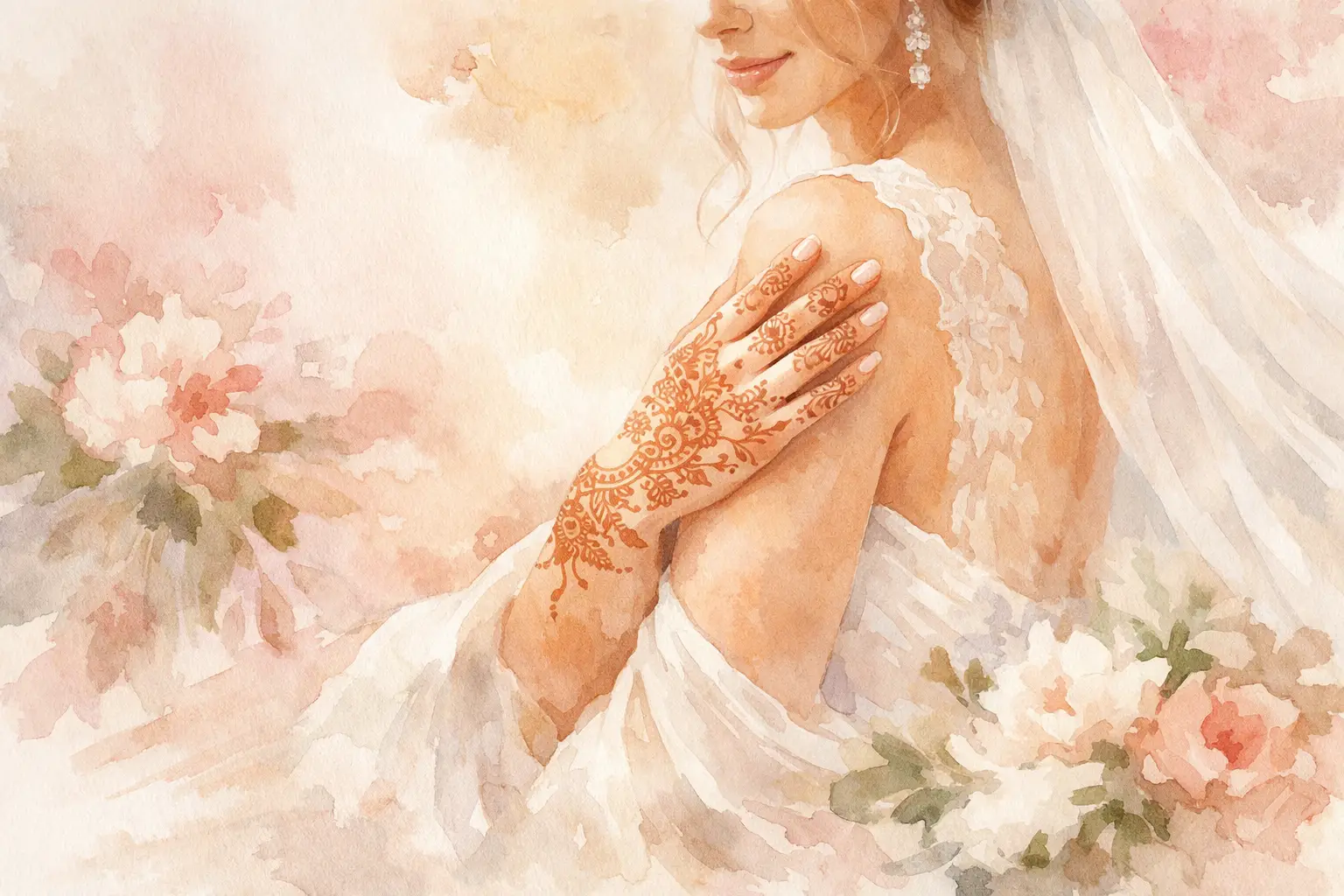
A white wedding dress can make every bridal detail feel more visible – and that is exactly why henna needs more thought, not less. When brides ask about henna with white wedding dress styling, they are usually trying to avoid one thing: a look that feels too heavy, too casual, or visually disconnected from the elegance of the gown.
TL;DR: Yes, henna can look stunning with a white wedding dress. The key is choosing refined placement, balanced design density, and a stain tone that complements the softness of white rather than fighting it.
Does henna with white wedding dress styling actually work?
Absolutely. In fact, the contrast can be beautiful. A white gown creates a clean, luminous backdrop, so well-executed henna stands out in a very intentional way. The result can feel regal, romantic, and deeply personal.
What matters is proportion. Traditional full bridal coverage can look breathtaking, but with a white dress, some brides prefer a lighter visual balance. If the gown has lace, beading, pearlwork, or embroidered sleeves, the henna should work with those details instead of competing against them.
This is where bridal styling becomes less about trends and more about editing. Not every bridal henna design suits every dress silhouette.
What kind of henna looks best with a white wedding dress?
The strongest choice is usually elegant, detailed work with breathing space in the pattern. Fine Khaleeji-inspired florals, graceful vines, finger detailing, and softly structured mandala elements tend to photograph beautifully against white.
If your dress is minimalist, you can go richer with the henna. If your dress is heavily embellished, a more selective design often looks more elevated. Brides often think more coverage always means more luxury, but that is not always true. With white, refinement reads beautifully.
A few combinations work especially well:
- Front-hand statement designs with lighter forearm detailing
- Full fingertips with open spaces through the palm
- Symmetrical bridal work on both hands with cleaner feet designs
- Delicate wrist-to-finger flow for civil weddings or modern bridal looks
If you are considering decorative body paint rather than natural stain, read White Henna: What It Is and When It Works. Many brides use the term loosely, but white henna and natural henna create very different results.
Where should bridal henna be placed if the dress is white?
This depends on what the dress reveals. If your gown has long sleeves, the hands become the focal point. In that case, detailed palms, fingers, and wrists usually make the most sense. If your dress has short sleeves or sheer sleeves, extending the design higher on the forearm can look beautifully intentional.
For feet, placement matters even more if you are wearing open bridal heels or doing pre-wedding photography. Henna on the top of the feet can look especially striking with white shoes, but it should feel polished, not crowded.
A practical rule: prioritize the areas that will actually be seen in photos. There is no need to overload hidden areas just for tradition if your overall bridal styling is modern and edited.
What stain color looks best against white fabric?
A rich brown to deep reddish-brown stain usually looks best. It gives the contrast brides want without looking harsh. Very light orange can disappear in photos, while overly dark or chemically altered tones can feel too stark next to a soft white gown.
This is one reason henna quality matters so much. Fresh, natural henna develops into a more flattering stain and tends to look more elegant on the wedding day. If you want a better sense of what separates premium paste from disappointing results, Henna Quality: How to Tell What’s Good is worth reading.
Should the design match the dress or the jewelry?
Ideally, both – but not literally. You do not need to copy the dress pattern stitch by stitch. Instead, echo its mood. If the gown is soft and floral, choose fluid florals. If the jewelry is bold and Gulf-inspired, you can bring in stronger symmetry, denser fingertips, or more regal framing around the wrists.
This is where experienced bridal artists make the difference. Good bridal henna does not sit separately from the look. It ties the look together.
What mistakes make henna feel out of place with a white dress?
The most common mistake is going too dense with no contrast or breathing room. On a richly embellished white bridal look, this can create visual overload. Another issue is poor timing. If henna is applied too late, the stain may not mature in time for the event. If applied too early, it may fade before the main celebration.
Style mismatch also matters. A very casual design can look disconnected from a formal gown, while an overly trendy pattern may not age well in wedding photos.
When should brides book their henna?
For a wedding look, the ideal time is usually 1 to 2 days before the main event so the stain can deepen beautifully. This gives you enough time for color development while keeping the design fresh.
If you are choosing a bridal artist, design skill is only part of the story. You also want natural henna, reliable timing, and someone who understands how the final look will appear in photos and alongside your dress. How to Choose the Right Henna Lady can help if you are comparing options.
For brides who want a polished, at-home experience with natural henna and refined bridal artistry, Mirra Henna offers bespoke bookings designed around the occasion, the outfit, and the finish you want in your wedding photos. If your dress is white, your henna should feel just as considered as the gown itself.
Leave a Reply