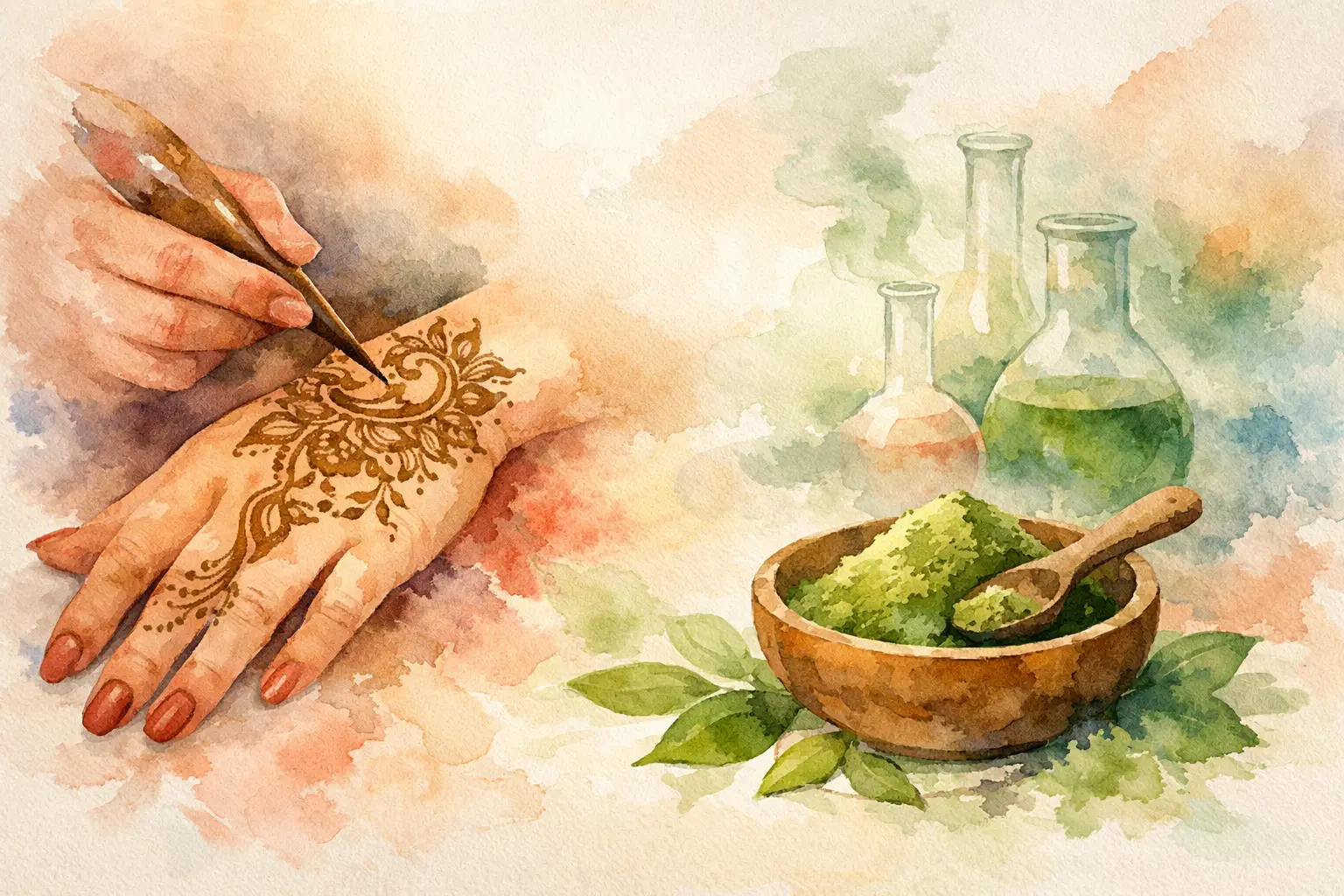
If you have ever wondered, can henna cause cancer, the short answer is this: pure, natural henna used on skin is not generally considered a cancer risk. The concern usually comes from adulterated products, especially so-called black henna, or from hair dyes and chemical additives that get grouped under the word henna.
TL;DR: Natural henna itself is not known as a common cause of cancer. The bigger concern is fake or heavily altered henna, especially black henna with added chemicals. If you want beautiful color and peace of mind, ask what is inside the paste before it touches your skin.
Can henna cause cancer, or is that a myth?
For most people, the fear starts with a very understandable question: if something stains the skin so deeply, could it be harmful long term? With natural henna, the stain comes from a plant compound called lawsone, found in the henna leaf. That is very different from a harsh industrial dye.
Traditional henna has been used across the Middle East, North Africa, and South Asia for generations, especially for weddings, Eid, and family celebrations. That long cultural history does not replace modern safety standards, but it does tell us something important: natural henna is not the same thing as an unknown chemical cosmetic.
Where confusion happens is when all henna products are treated as if they are identical. They are not. A fresh natural paste made from henna powder, sugar, essential oils, and water is very different from a cone filled with synthetic dyes, preservatives, or para-phenylenediamine, often called PPD.
What is the real safety concern with henna?
The real red flag is not usually natural henna. It is fake henna sold for darker, faster results.
This is why black henna gets so much attention. Black henna is often not true henna at all. It may contain PPD, a chemical linked more commonly with allergic reactions, chemical burns, blistering, and long-term skin sensitivity. That does not mean every irritation leads to cancer, but it does mean the product is unsafe for skin use.
If you are specifically worried about black henna, read Is Black Henna Safe to Use on Skin?. It explains why artists who care about skin safety avoid it.
Is natural henna carcinogenic?
Based on current public understanding, natural henna used traditionally on skin is not widely recognized as carcinogenic in normal cosmetic use. That said, safety always depends on the full formula, the quality of ingredients, and how the product is stored and prepared.
This is where a thoughtful answer matters. “Natural” on a label does not automatically guarantee purity. Some cones marketed as herbal or natural still contain mystery ingredients. If the seller cannot clearly explain what is in the paste, that is a reason to pause.
A good henna paste should smell earthy, fresh, and botanical. Many well-made cones have a pleasant herbal scent, sometimes with eucalyptus notes from essential oils. It should not smell like strong chemical dye.
How can you tell if henna is safe to use?
The best question is not only can henna cause cancer, but what kind of henna is this, exactly?
Look for transparency. Ask whether the paste is made from henna powder, sugar, lemon or water, and skin-safe essential oils. Ask how fresh it is. Ask how dark it is expected to stain. Natural henna typically develops from orange to reddish brown to deep brown over time. If someone promises an instant jet-black stain on skin, that is not traditional natural henna.
If you want to understand the difference between fresh paste and mass-produced formulas, How to Prepare Natural Henna Paste From Powder gives helpful context.
Should you avoid henna if you have sensitive skin?
Not necessarily, but you should be selective. Even natural ingredients can irritate very sensitive skin, especially if essential oils are involved. A patch test can help, particularly for brides or anyone booking henna for a major event. The last thing anyone wants before a henna night or wedding is a surprise skin reaction.
Children, pregnant women, and people with a history of allergies should be extra careful about ingredients and artist standards. That does not mean henna is off-limits. It means quality matters more.
Why do some people still worry about henna and cancer?
Part of it is understandable caution. Anything applied to skin, hair, or scalp gets scrutiny now, and rightly so. Part of it is also mix-ups between natural body art henna, black henna, and some commercial hair products labeled henna but blended with metallic salts or synthetic dyes.
So the honest answer is nuanced. Pure henna is not the main concern. Poorly regulated products are.
That is why choosing an experienced artist matters as much as choosing a beautiful design. The finest henna is not only about rich stain and elegant detail. It is also about trust, ingredient integrity, and the confidence to wear it for your celebration knowing it is rooted in both tradition and care.
If you are planning bridal, party, or at-home henna and want artistry that feels as considered as the occasion itself, Mirra Henna offers 100% natural henna with a premium mobile experience designed for women and families who value beauty, authenticity, and peace of mind. When in doubt, always ask what is in the cone before you book.
Leave a Reply